When Manuel jumped over the Masai
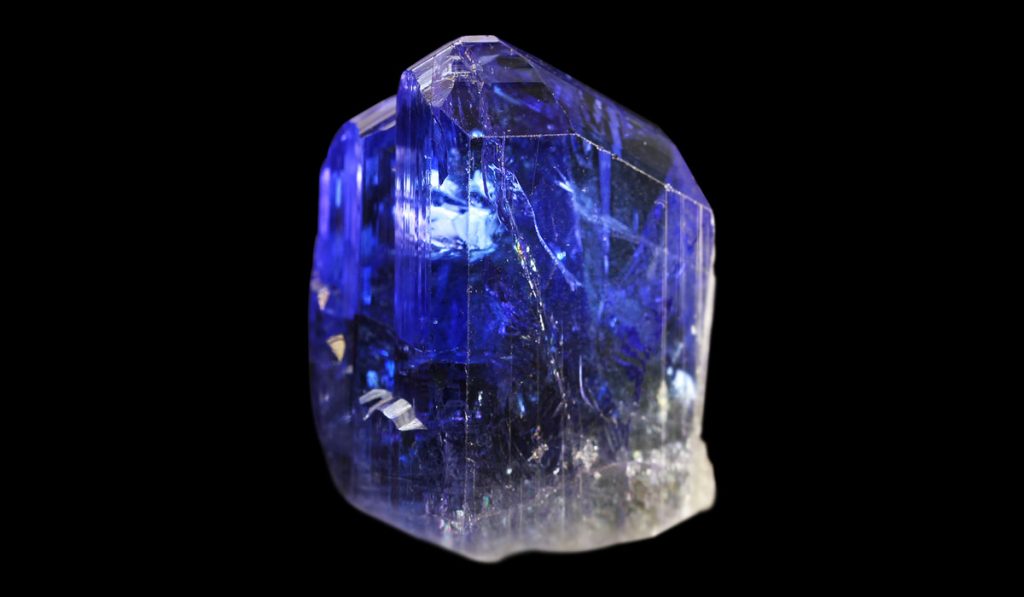
Tanzanite is the Gem of December and of the 24th wedding anniversary. Its tormented history begins quite recently, in 1967 in Merelani, Northern Tanzania, when a member of a Masai tribe stumbled over a group of highly transparent stones with intense blue crystals.
The naive Masai informed the legendary Manuel D’Souza (one of the many fortune-hunters in the area) of the discovery. Manuel was near Mount Kilimanjaro, about 90 km from Arusha, searching for Sapphires.
From the start, Manuel believed that the lucky find consisted of the much-coveted blue Corundum, the Sapphire variety, of which he was so fond. But what he then discovered was equally interesting: it was not a
Sapphire, but Tanzanite.
Given the marvelous color exhibited by those rare and fascinating crystals, Manuel immediately requested permission from the Tanzanian government to dig. The Masai who first found the Gem was left with only glory.
The discovery shook the gemological world, which identified it as a variety of Zoisite, principally composed of Silicon, Calcium and Aluminum.
Zoisite was a mineral already known for about two hundred years. It was first identified by the Austrian scientist Siegmund Zois Edelstein who found it in Carinthia, but its discovery certainly did not have the effects that the discovery of Tanzanite itself had.
In fact, after the fortuitous Masai discovery, hundreds of miners again crowded into a 20-square-km area. Due to the momentary initial chaos, much rough was immediately stolen in large quantities.
The unmistakable colors of Tanzanite
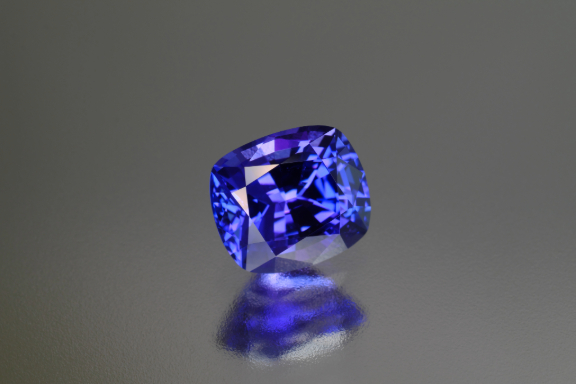
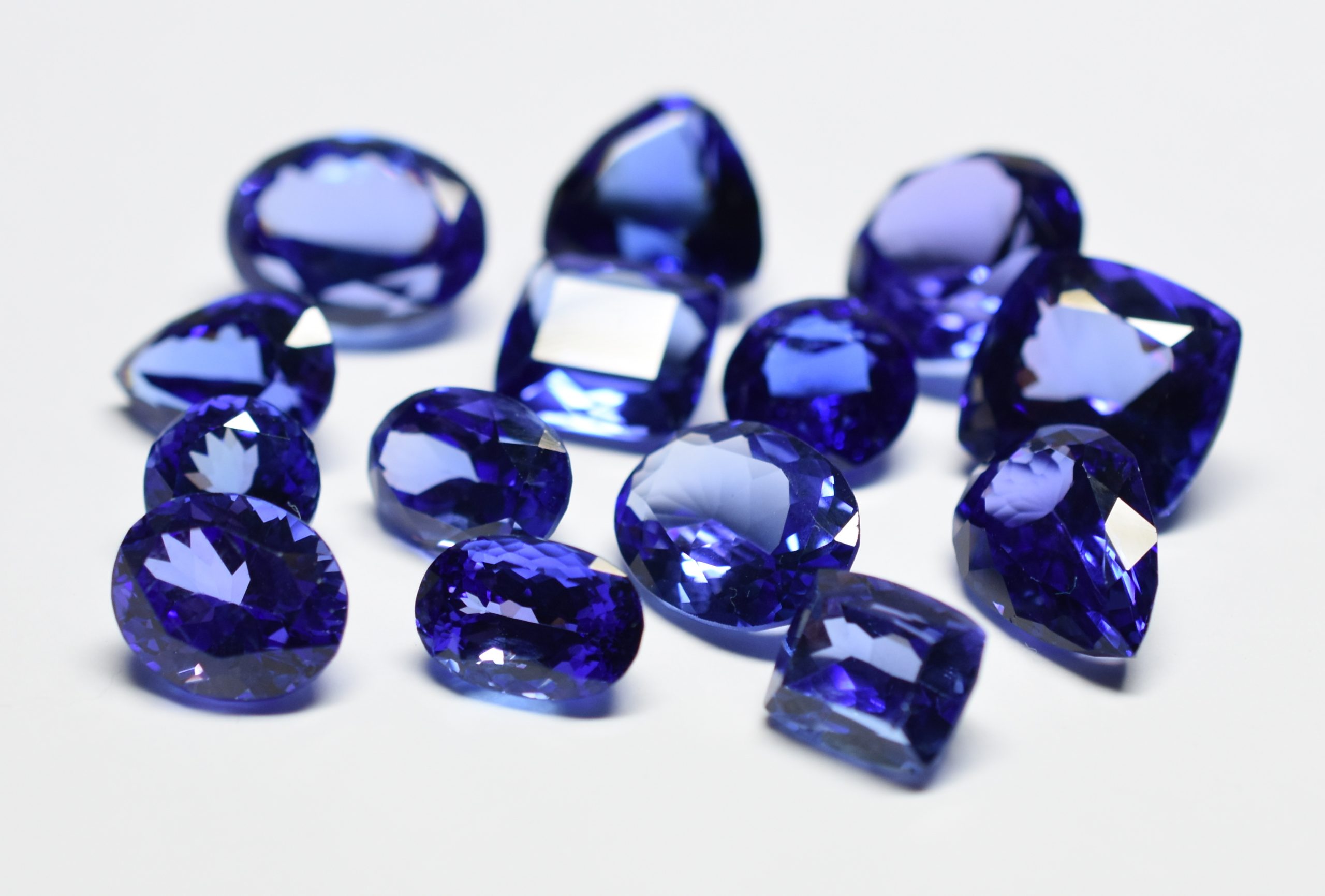
The Pleochroism of this Gem forces the cutter to perform a cut that saves the most weight possible. At the same time, the cut must bring out the best color of the Gem when observed frontally face-up. Usually when Tanzanite is cut to emphasize the violet-blue color, much more weight is lost compared to when it is cut to emphasize the blue-purple: for this reason the market is loaded with blue-purple Tanzanite.
However, when the Gem can display an absolutely desirable color, the cutter prefers to lose more weight and emphasize the violet-blue.
On the Mohs hardness scale, Tanzanite varies from 6 to 7. It has one direction of cleavage and is very sensitive to thermal shock. For this reason it might be rather dangerous to use it daily or to wash it in an ultrasonic machine.
Many of the largest and most fascinating Stones reside in museums and private collections.
Usually Tanzanite is cut:
1) Oval Mixed
2) Square Cushion
3) Octagon
4) Trillion-Cut.
Tanzanite romance: the muse of Henry Platt
Returning to Tanzanite’s story, it must be highlighted that Tiffany’s sumptuous advertising campaigns in 1968 made prices soar, especially in a period when the availability of Sapphire was rather scarce.
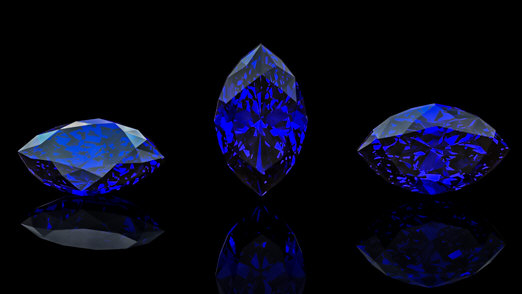
It was Henry Platt of Tiffany who suggested this exotic name that contributed to the grand success of the advertising campaign of one of the coolest House Designs in the world!
In 1971, the government of Tanzania took over the mining operations. As a consequence, there was a clear decrease in the supply imposed by the government and prices became sky-high. All this led to an inevitable arrest of the Tanzanite market.
In 1980 an incredible event occurred: the Tanzanian government lost control of the mine. Immediately thousands of miners resumed the wild rush to hunt for the Stone loved by Platt. But in 1998 a flood catastrophically drowned more than 100 miners. The tragedy had been long announced, given the primitive working conditions in which the miners labored.
Fortunately today the situation has stabilized.
The Smithsonian Institution owns a 122.7-carat faceted Tanzanite of marvelous color and an extremely rare 18.2-carat Cat’s-Eye Tanzanite, which are part of the many records this Gem boasts.