Sacred Ruby and Profane Ruby
Ruby is often associated with wisdom, power and desire; many times, given its red color, it is associated with love and passion.
Ratnaraj is the ancient Sanskrit name meaning “king of Precious Stones”, from which the current name derives.
Job, in the Bible, said that “Wisdom is more precious than Rubies”. This clearly tells us how long this Gem has been considered sacred and associated with the virtue of wisdom.
Ruby is the Gem of July and the 15th wedding anniversary. For centuries, it has always been present in all the best imperial Jewelry collections; in fact, it is a Gem widely worn in high society.
It can command the highest per-carat prices of all colored stones. At a 1988 Sotheby’s auction, a 16-carat Ruby reached the figure of 227,000 dollars per carat, cheerfully exceeding a total of 3 million dollars.
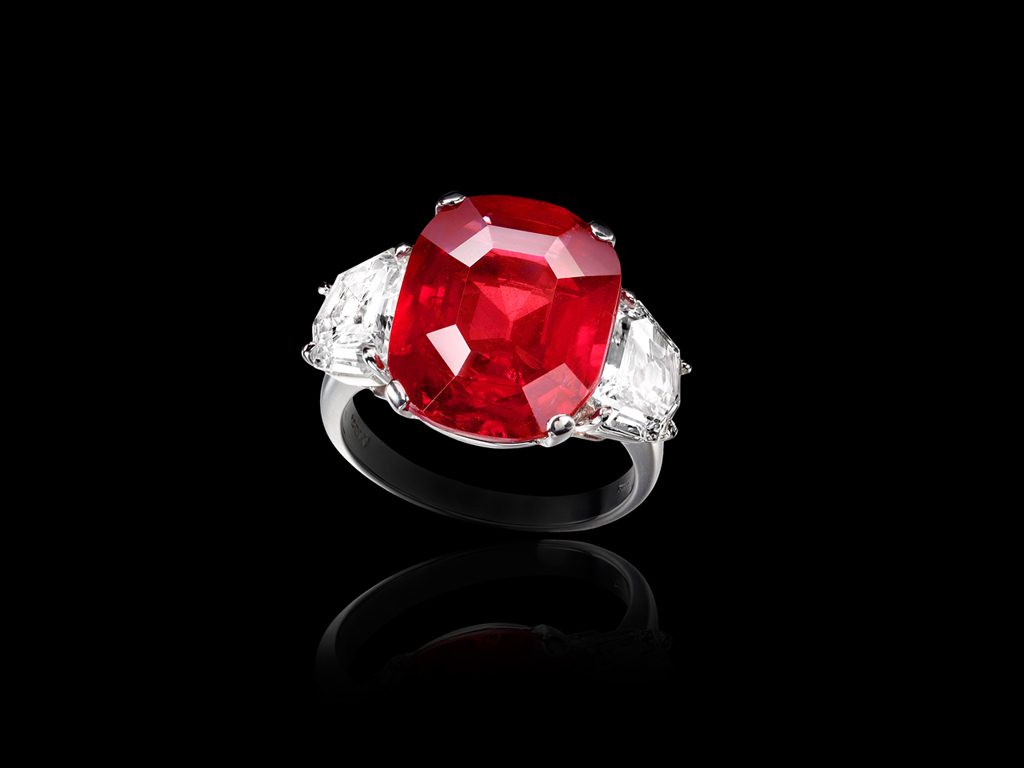
In December 2011, Elizabeth Taylor’s entire jewelry collection, which included several Rubies, went on auction at Christie’s. A ring from this magnificent collection, with a central 8.24-carat Ruby, broke all then-records, achieving the astronomical figure of 512,925 dollars per carat.
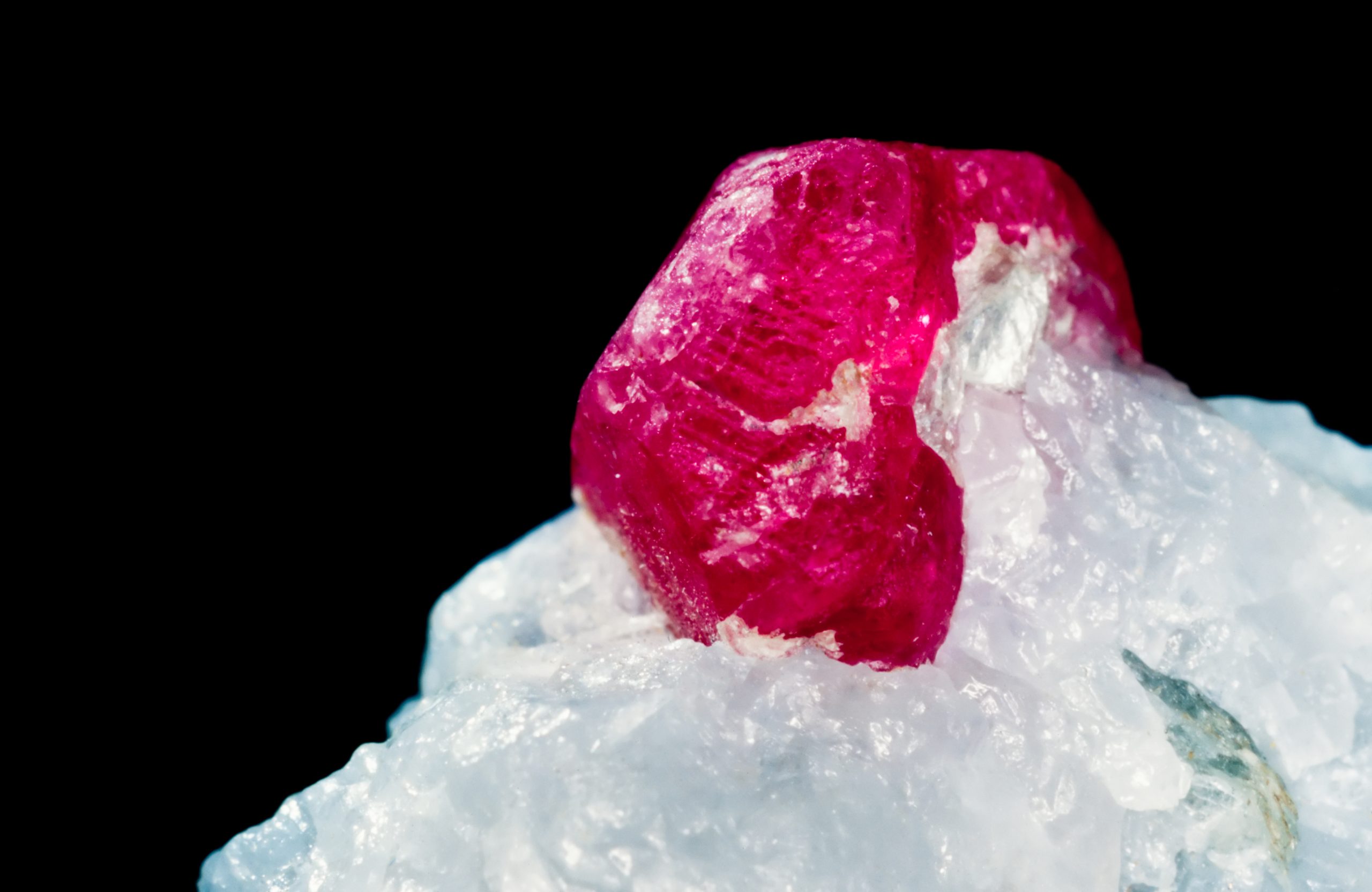
The Pigeon Blood Red of the Liberty Bell Ruby has flown away.
Corundum is an Aluminum Oxide that forms in rocks with abundant presence of Aluminum and Oxygen and with a low presence of Silicon.
In its pure form, Corundum is colorless, but chromophore elements such as Chromium can color it red. The more Chromium present in the Gem, the more saturated the Ruby’s color will be and the softer its fluorescence.
The most classic example of Pigeon Blood color comes from the Sunrise Ruby, the most expensive Ruby in history, bought in May 2015 by an anonymous buyer for “only” 30 million dollars.
The Liberty Bell Ruby would also be a beautiful example of pigeon-blood Ruby, if only one knew where it ended up. In 2011 it was stolen in a well-orchestrated armed raid, and it must be said it was a job worthy of fine connoisseurs, because it was also the largest gem-quality Ruby ever mined.
The Burma Ruby and the Gem smugglers
In Mogok, Myanmar, formerly Burma, Ruby forms in Marble. It is the numerous annual rains that erode the mountain and transport sediments to the alluvial zones. The mine boasts rather modern equipment, but lately has been bringing out few beautiful Stones. Moreover, the exact number of Gems currently extracted will never be known, given the considerable number of smugglers.
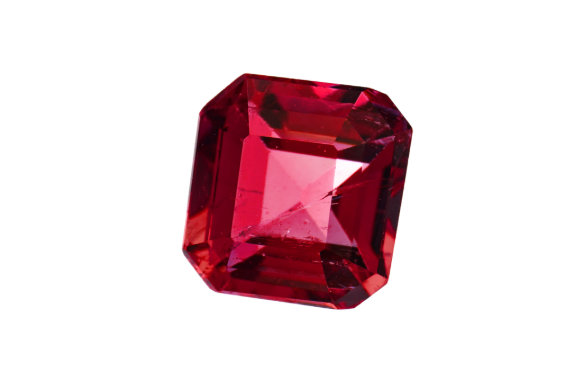
In addition to smuggling, when talking about Rubies, one must also pay attention to imitations. The most famous non-Ruby Ruby in history immediately comes to mind, cut as an irregular cabochon… yes indeed, we are talking about the Black Prince’s Ruby: 170 carats of Spinel (the Spinel Gem), long believed to be a Ruby, mounted in one of the oldest pieces of the Crown Jewels of the United Kingdom.
So it was not only Cleopatra who got tricked with Peridots believed to be Emeralds, but much worse was done by all the British rulers who from 1367, i.e. from the time of Edward Woodstock (the Black Prince), to around 1900, wore a Spinel believing it to be a Ruby.
Cut and setting
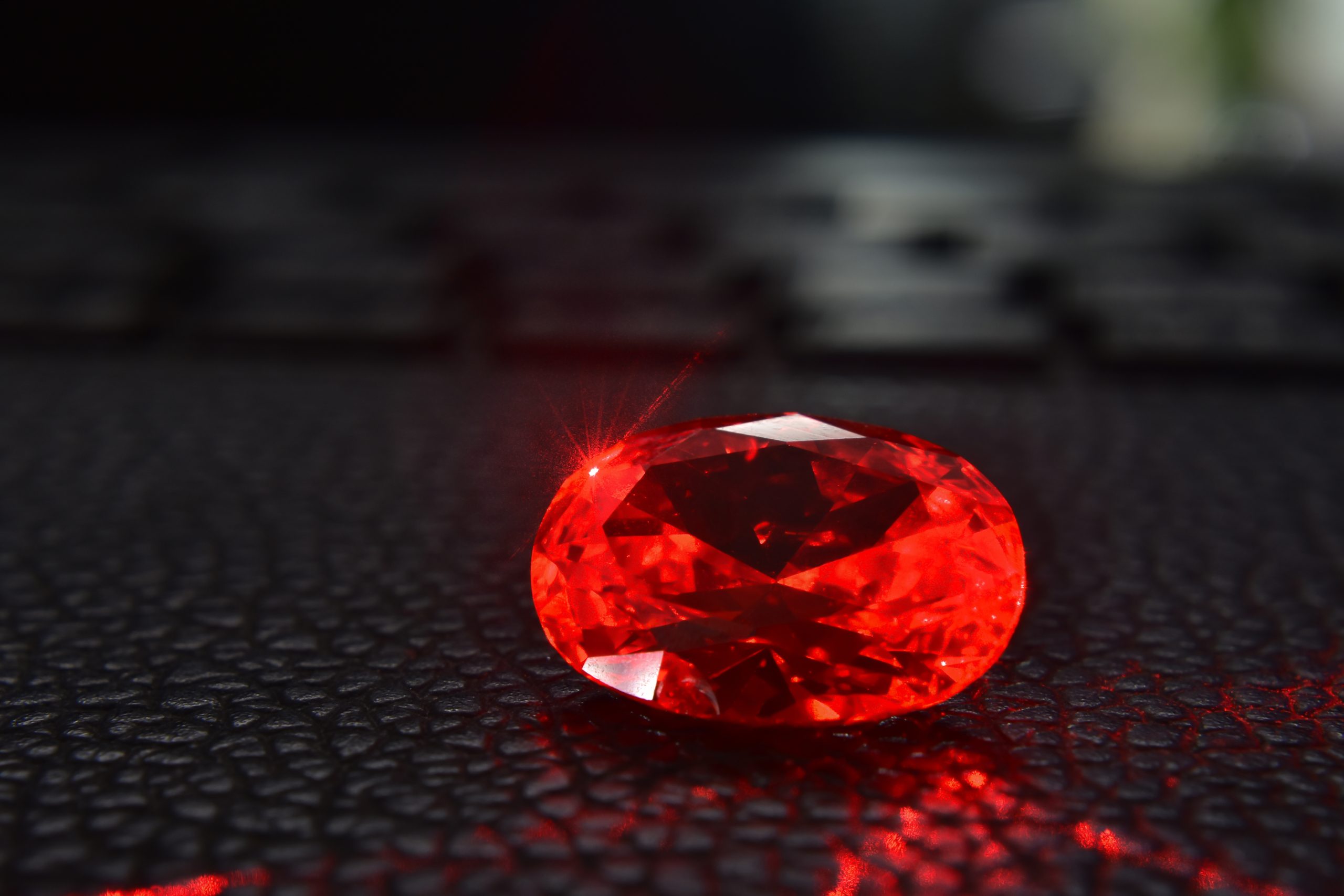
Many times, the Ruby crystal appears in a tabular form of hexagonal prism and forces cutters to make thin cuts, often Oval or Cushion; sometimes it appears in pyramidal or bipyramidal form.
Cuts such as Pear, Trillion, Emerald and Marquise are usually applied to truly top-quality Stones.
Because it belongs to the family of Corundums, Ruby has remarkable hardness and therefore can be safely mounted in rings with prong setting, in trilogy rings, in anniversary bands, in solitaires and in illusion settings.
Fantastic is the Ruby-Tanzanite pairing, which in 2011 bewitched all the experts in the sector, who defined it as the pairing of the year.
Rubies have often been used in place of Diamonds to embellish the magnificent stud earrings, always original and of remarkable effect. Not infrequently, they have been used as ornaments on drop earrings, giving life to the most fantastic and sexy artistic creations.
Rubies scattered around the World
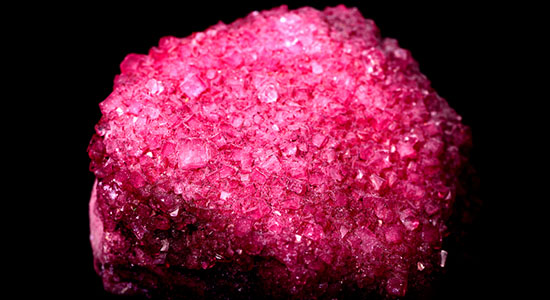
In addition to the legendary Mogok source, we remember Mong-Hsu, also in Myanmar, which remains the world’s largest source of commercial Rubies. Unfortunately, the political conditions do not allow understanding how much longer this source can be exploited.
The Pailin Rubies in nearby Cambodia are identical to the Thai ones, since they are found in the same geographical area, so they are generally dark.
Rubies in Sri Lanka are a small portion compared to the number of Sapphires produced on this island.
The most important deposit of Kenyan Rubies is in Tsavo-West National Park; two mines in particular are very famous: Penny Lane Mine and John Saul Mine; it is estimated that they can be exploited for another 20 years.
The deposits in Tanzania are located in the very famous Umba River Valley: Morogoro, Longido, Lossogonoi, Tunduru.
In Madagascar, a nation famous for Sapphires, two deposits have had a devastating impact on the world market: Vatomandry and Andilamena.
And last but absolutely not least Vietnam, with the Luc Yen mine, considered by many to be the most promising mine of high-quality Rubies of the modern era.