
Paraiba Tourmaline prices
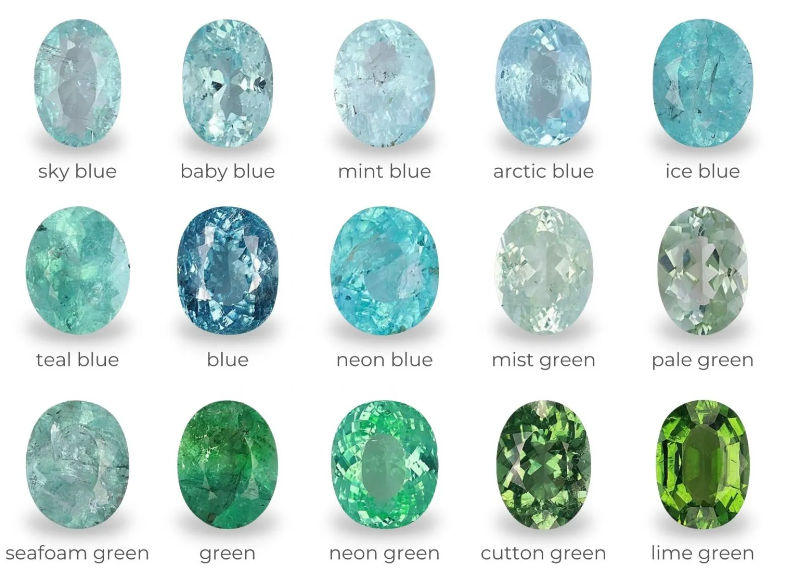
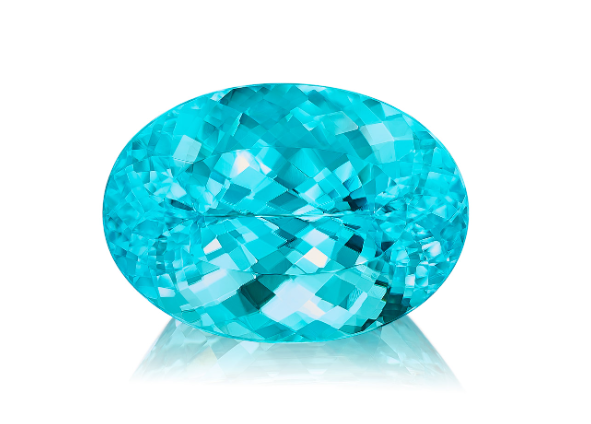
In 1989 a Tourmaline was discovered which in a short time enthused the world market, especially in Japan where demand is insatiable: we are talking about Paraiba Tourmaline. No Tourmaline reaches Paraiba prices — they can even exceed 10,000 dollars per carat. But beware: Paraiba Tourmaline is worth these figures only when it is at the top of the quality and when it weighs between 3 and 5 carats. To better capture the attention of clients, dealers use various Trade Terms to define its color. Among the most-used trade terms we find: Neon Blue, Electric Blue, Turquoise Blue, Sapphire Blue and Mint Green.
The incredible color intensity displayed by some spectacular specimens leads to very high prices. The rarity and strong demand for this gem also impose very respectable prices.
The marvelous Paraiba Tourmaline is a variety of the Elbaite species, just like the Watermelon Tourmaline and Rubellite Tourmaline.
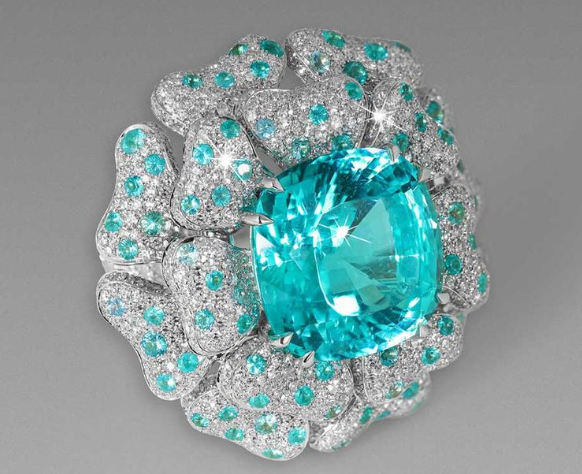
An incredible story for a crazy Gem
In the early ’80s, a Garimpeiro brought an anomalous rough to the independent stone-prospector Heitor Dimar Barbosa. Garimpeiro Barbosa, sensing the scale of the find, conquered the rights for the excavation operations of that area. For 7 years the Mina da Batalha was dug in conditions of extreme temperatures, using the very little available water. At first the results were rather modest; indeed the extracted Tourmalines were modest in number. Moreover, almost all the first Tourmalines that came to light displayed spectral green colors. However, after much excavation, the Garimpeiros brought to light the electric-blue stones now world-famous. In the early ’90s, the miners dug 10,000 carats of facetable rough, but production immediately decreased. The causes of the production collapse are mainly two: the wars that broke out for the rights to dig in the mine, and the extreme difficulties in digging.
Its properties
Tourmaline is a complex borosilicate that has in pyroelectricity one of its peculiarities. It exhibits over a hundred different spectral colors. Some crystals show distinct and typical color zoning. When a Gem shows color zoning with two or more colors, it is defined by the international term Parti-colored.
Tourmaline is a Precious Stone that crystallizes in the trigonal system, and its hardness of 7.5, combined with good resistance and very good stability, makes it absolutely suitable for use in jewelry.
And it is precisely in jewelry stores that Tourmaline can be seen in all its colors and can be found in every price range. From calibrated green and pale pink Tourmalines, to Gem-quality Tourmalines of saturated green, red or blue color.
Among the most important gemological characteristics of Tourmaline are certainly the high birefringence and the strong pleochroism.
Related Articles
Heliodor and his Brothers.. Bixbite, Morganite..
Heliodor: Golden Beryl, Brother of Aquamarine and Goshenite When in nature, the Beryl appears yellow it is called Heliodor, when instead it shows a enough green it is called Emerald.…