
Cutting Diamonds is not a task for amateurs, but a work worthy of an artist: the cutter. Whoever cuts Diamonds is an artist who relies on technique and creative flair, bringing to light the splendor of the Diamond, freed from all the rough material that obscures its beauty.
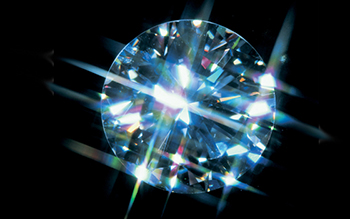
The Diamond has two characteristics that make its processing particularly complex, namely hardness and fragility. It seems impossible that both of these elements are present, but it is precisely such a curious detail that increases the Diamond’s charm. The Gem of Wonders, over the centuries, has contributed to enhancing the beauty of famous women, such as Liz Taylor, the diva with violet eyes, increasing her legendary aura.
Techniques for cutting Diamonds
The most ancient technique for cutting rough Diamonds is called cleavage, namely that particular process which involves the use of a wooden mallet and a blade to rough out the rough and bring out, thanks to the magic of an atavistic technique, the true face of the Diamond. The blade acts as a chisel, following the cleavage directions and creating, along the way, the shape that the Diamond will have at the end of the work.
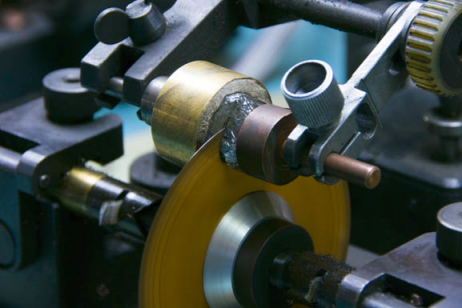
In recent years the sawing procedure has spread, which compared to cleavage has the merit of avoiding excessive waste of rough material. The cleavage technique is a legacy of tradition and, at the same time, clear proof that cutting Diamonds skillfully is an art. Learning to cut Diamonds requires a long and difficult path, in order to perfect the final product. Sawing is a more recent technique that breaks the Diamond with a circular saw.
From rough to Diamond
Pre-forming, as the word itself indicates, is the moment in which the Diamond begins to take on its own identity. In this delicate phase the Diamond acquires that appearance that will make it absolutely unique. In this case, the tools used are a lathe and another Diamond. The impact between the two Diamonds determines the presence of microfractures that make it easier to eliminate the excess material. Thus the definitive shape gradually emerges from the cutter’s hands.
The cutter’s hands are usually magical, as in the case of our friend Simone, a brilliant cutter, all genius and impetuosity.
The Diamond, similar to a chrysalis in its cocoon, has not yet assumed its final shape. Through the faceting process, first eight upper facets and then eight lower facets are obtained. After that, thanks to special tweezers and a cast iron disc, the famous brilliant cut is obtained with a myriad of facets. The Round Brilliant Cut is a true apotheosis of pure light that fragments into a shower of flashes.
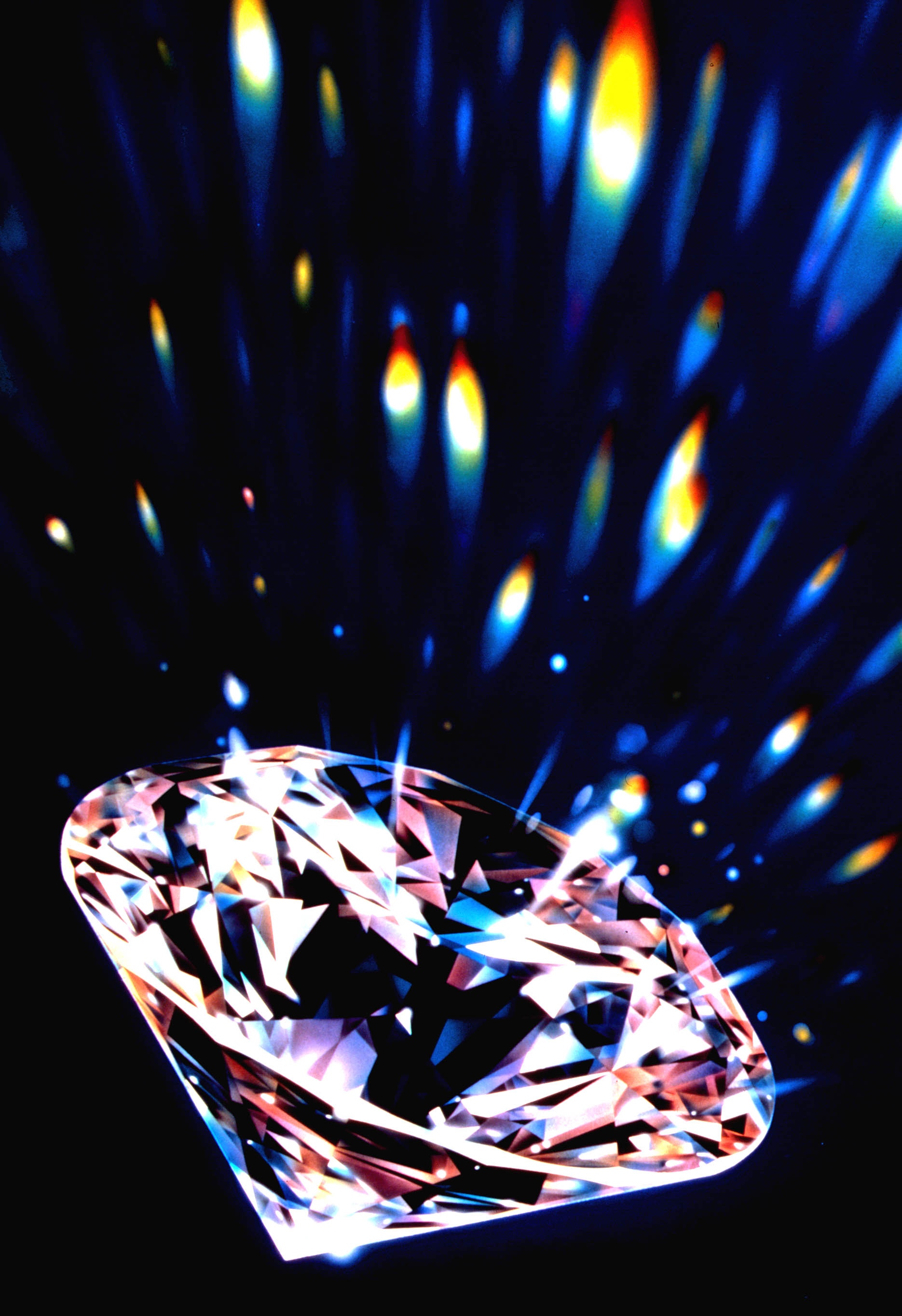
At this point the Diamond is now ready to be set. So that it may be at the maximum of its splendor, polishing is used, aimed at eliminating even imperceptible imperfections, which can alter its purity and infinite beauty.
Related Articles
Heliodor and his Brothers.. Bixbite, Morganite..
Heliodor: Golden Beryl, Brother of Aquamarine and Goshenite When in nature, the Beryl appears yellow it is called Heliodor, when instead it shows a enough green it is called Emerald.…