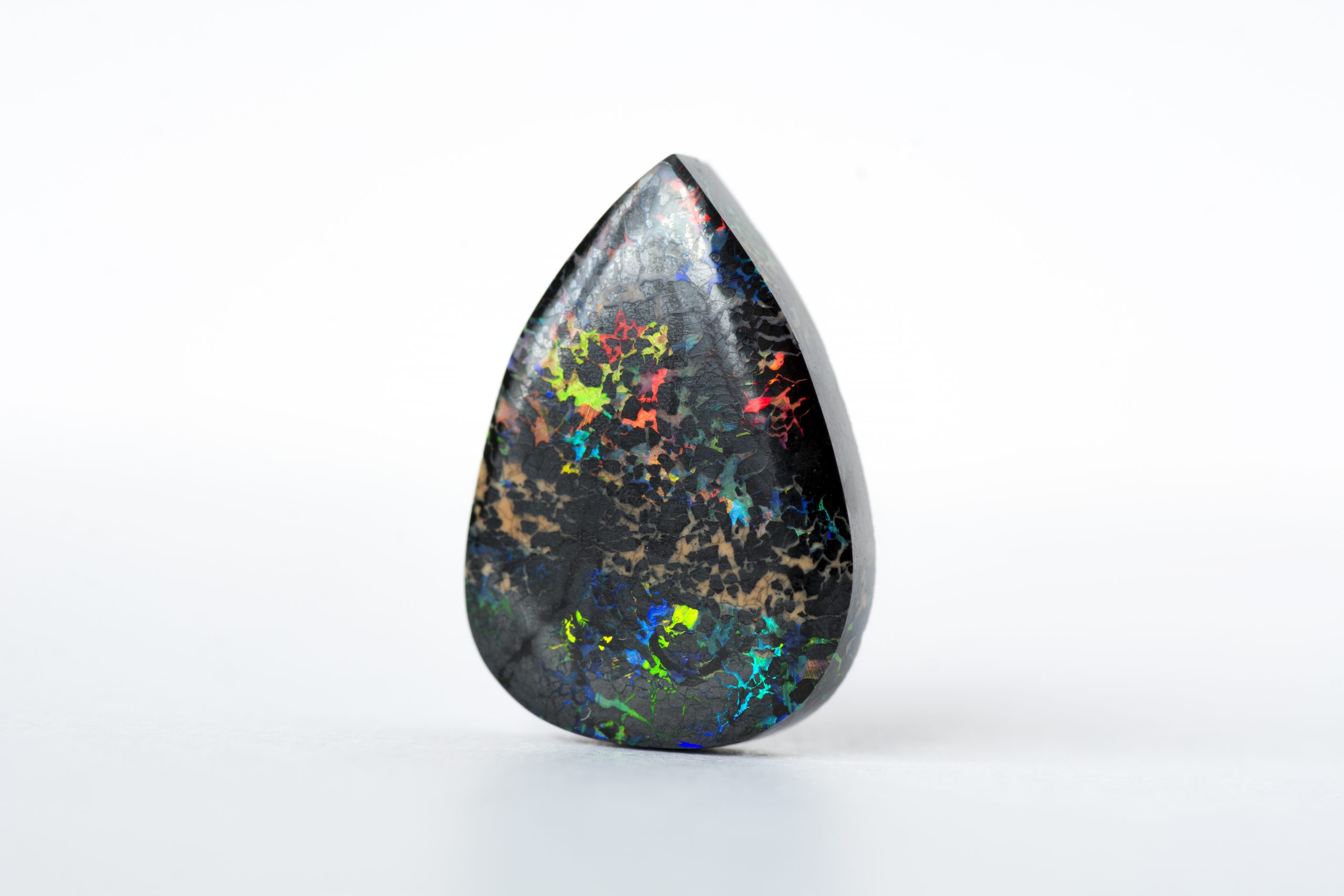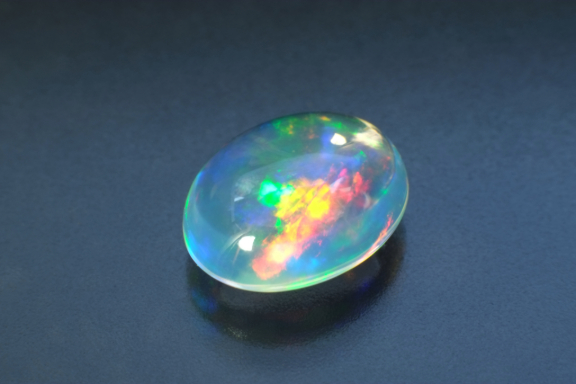
Opal, if you break it, it’s worth nothing.
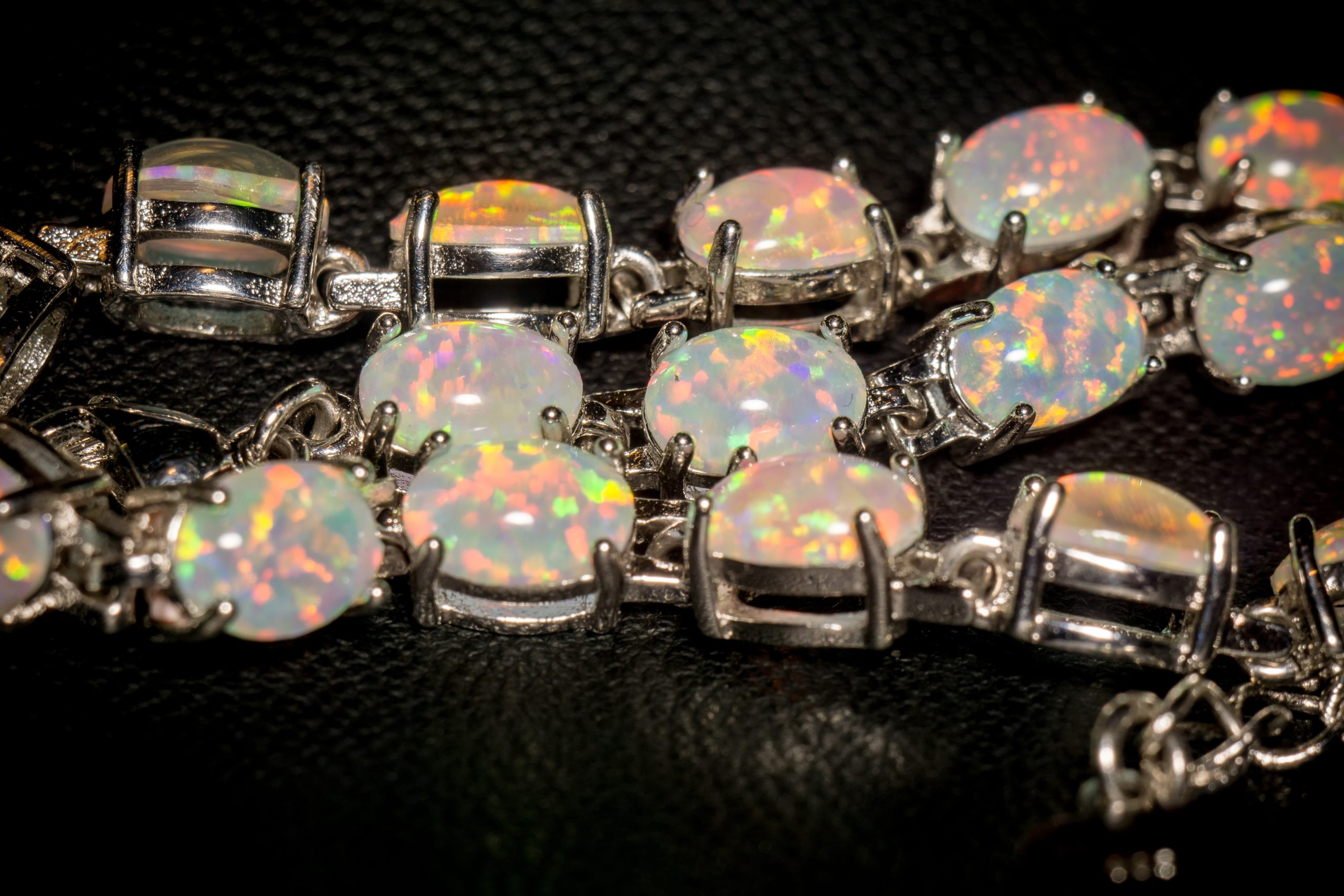
Writers have compared Opals to volcanoes, galaxies and fireworks.
Those who admired it gave it poetic names such as Pandora, Empress and Light of the World.
This Gem, which on average has a commercial value, in its most beautiful specimens has nothing to envy of the Big Three (Emerald, Ruby and Sapphire).
Most Opal deposits formed between 15 and 30 million years ago, except for the Australian ones at Mintabie, which date back to 400 million years ago.
If on one hand Opals fascinate the mind with their play of colors, on the other Opals are Gems of low stability and low resistance: they fracture internally as soon as they lose part of the liquid contained inside.
The charm of its formation
Precious Opals form in desert areas with strong seasonal rainfall and rocks rich in Silicon. During winter, heavy rains raise the water table and transport Silicon downward through the rocks. This Silicon solution fills the cracks of the rocks below the water table, so that in summer, the dry climate allows the water table to retreat downward. As soon as the water evaporates, it deposits the Silicon there on the spot, thus forming the Opal. This entire process takes millions of years. Despite evaporation, Opal on average retains from 3 to 10% of liquid, in some rare cases even 20%.
Precious Opals and common Opals
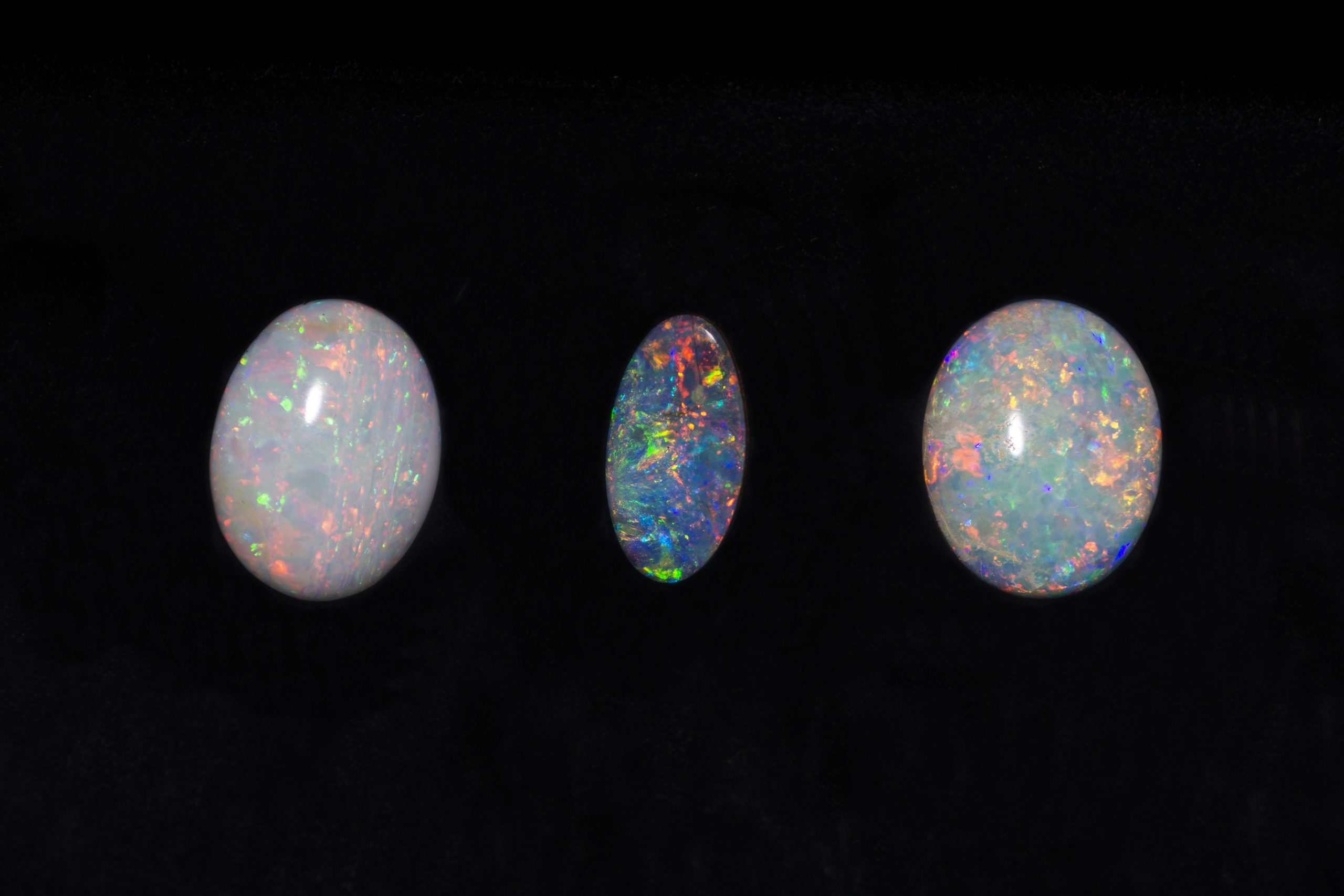
There are two categories of Opals: precious and common. Precious Opals show the Play of Color, common ones do not. Opals do not have a crystalline structure; in fact, with an electron microscope reaching 30,000 magnifications, billions of Silicon spheres have been discovered inside them, arranged together like oranges in crates. In common Opals the Silicon spheres are arranged randomly, while in precious ones they are arranged in a regular, rectangular lattice.
How many opals exist?
There are truly several varieties of Opal, but only a few are to be considered jewelry-grade. Below we recall the most famous: Black Opal, White Opal, Crystal Opal, Water Opal and Fire Opal. On the other hand, there are various Synthetic Opals, among which the most famous is undoubtedly Gilson.